
Intellectual property law covers various intellectual property rights that protect different aspects of innovation. Depending on the nature of the innovation – whether it is a technical invention, an aesthetic design or a distinctive sign – different forms of protection may be appropriate. Choosing the right form of protection is crucial to the commercial success of your innovation.
Whilst patents and utility models protect technical solutions, trade marks protect your identity in the market and designs protect the aesthetic appearance of your products. Often, a combination of different intellectual property rights makes sense: an innovative product can be protected simultaneously by a patent for its technical function, a design for its external form and a trade mark for the product name.
Below, we provide an overview of the key areas of intellectual property law in which we can assist you.
Would you like to know straight away what we can do for you? Find out here how we can help you.
A patent grants its proprietor the right to prevent third parties from using the proprietor’s technical invention. Products and processes may be protected provided they are new, involve an inventive step and meet further requirements.
The patent is granted following an application and examination procedure and is valid for a maximum of twenty years from the filing date. During this period, the patent holder may prohibit third parties from using the invention or grant licences.
Patent applications may be filed with the German Patent and Trade Mark Office (DPMA), the European Patent Office (EPO) or via the Patent Cooperation Treaty (PCT) procedure.
Patent law also covers opposition and invalidity proceedings, as well as the enforcement of rights in the event of infringements by third parties.
We support you every step of the way, from filing your patent application through the grant procedure to enforcing your rights.
A utility model is often referred to as a 'small patent' and protects technical inventions without a prior examination procedure. The term of protection is a maximum of ten years from the filing date. Unlike a patent, utility models are registered without an examination of their content, which is why registration can take place quickly – often within a few weeks.
Products can be protected but not processes. The requirements for protection are similar to those for a patent: novelty, inventive step and other requirements. However, certain special features apply to the concept of novelty, such as a six-month grace period.
German utility models are limited in scope to Germany. The lack of examination makes the utility model more cost-effective but also entails risks regarding legal certainty.
We can assess whether a utility model is suitable for your invention and, if desired, develop strategies for optimal combination with patent protection.
The German Employee Inventions Act (ArbnErfG) sets out provisions governing inventions and technical improvement proposals made by employees in the private and public sectors, as well as by civil servants and soldiers.
It distinguishes between service inventions and independent inventions. Service inventions are inventions made during the term of the employment relationship which either arose from the duties incumbent upon the employee in the company or in the public administration, or are based significantly on the experience or work of the company or the public administration.
Service inventions must be reported to the employer without delay. If the employer claims the invention, the employee is entitled in return to appropriate remuneration, calculated in accordance with established guidelines.
The law provides for detailed reporting, approval and remuneration procedures, and failure to comply with these may have legal consequences.
We advise employers and employees on all aspects of employee invention law.
A trade mark is a sign that identifies a company's goods or services and distinguishes them from those of other suppliers. Words, letters, numbers, images, sound marks, three-dimensional designs and other presentations, including colours and colour combinations, may be protected. A prerequisite for trade mark protection is that the sign must have distinctive character and must not be descriptive or belong to the public domain.
Trade mark protection arises through registration, through use in trade, or through widespread recognition.
Protection applies to the registered goods and services and can be renewed every ten years. Trade mark owners may prohibit third parties from using identical or confusingly similar signs for identical or similar goods.
Trade mark law also covers cancellation, revocation and invalidity proceedings.
We develop trade mark protection strategies that safeguard your marks nationally and internationally.
Design law protects the two-dimensional or three-dimensional appearance of a whole product or part thereof, resulting in particular from the features of the lines, contours, colours, shape, surface texture or materials of the product itself or its ornamentation. The requirements for protection are novelty and individual character. The term of protection is a maximum of 25 years from the filing date.
Designs can be registered as national designs, Community designs or internationally.
Among other things, the appearance of products that is determined solely by their technical function is not eligible for protection.
A registered design grants its owner the right to prohibit third parties from using it without their consent.
We protect your product designs through strategic design applications and enforce your rights where necessary.
Do you have any questions about protecting your innovations? Contact us for a non-binding initial consultation. We will take the time to understand your situation and outline specific solutions for you.


Innovation IP
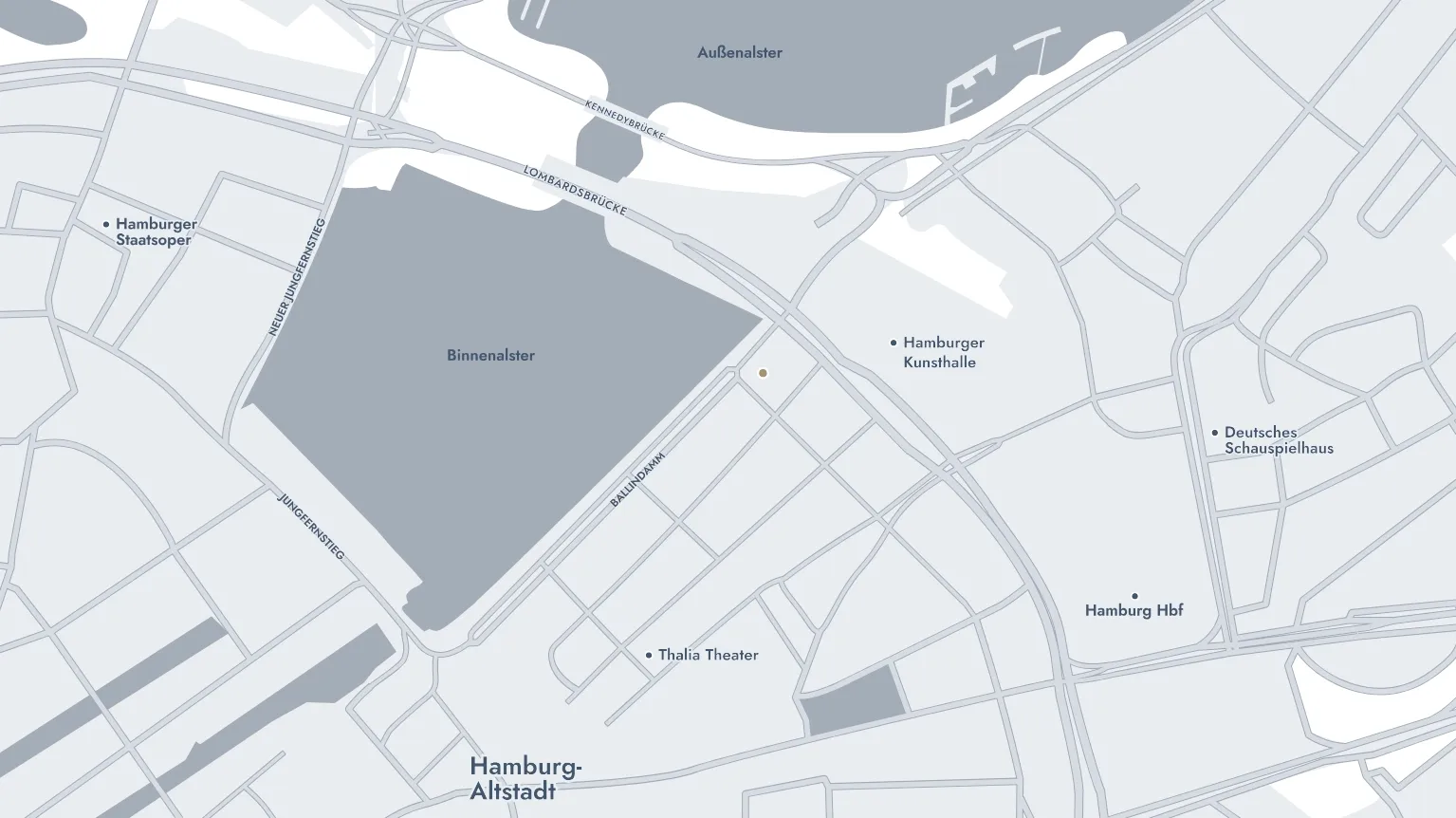
Ballindamm 3
20095 Hamburg
Germany