
Every industry is subject to technological progress – each with its own challenges, standards and innovation cycles. Effective protection of innovations requires not only legal expertise, but also a deep understanding of the technical aspects and economic characteristics of your industry.
We bring a solid technical background and many years of industry experience to the table. We speak your language, understand your development processes and know your relevant markets. This expertise enables us to accurately capture your innovations, comprehensively protect them and help you position them strategically in the best possible way.
Here we provide you with an overview of the sectors in which we possess particular expertise.
The telecommunications industry is characterised by rapid innovation cycles, complex standardisation processes and global technology standards. Mobile communication technologies such as 5G and 6G, network infrastructures, transmission protocols and wireless communication systems form the backbone of the digital society.
Of particular importance are standard-essential patents (SEPs), which must be considered when implementing technical standards and which are licensed in accordance with FRAND principles (fair, reasonable and non-discriminatory).
Legal protection of one's own innovations is crucial to competitiveness, particularly ahead of meetings between the industry's key players to further develop standards. Furthermore, patent law assessments are essential for evaluating the economic potential of innovations. These include, for example, assessing the prospects of grant in patent grant proceedings, examining legal validity following successful patent grants, and evaluating the prospects of success in having applications and patents recognised as standard essential.
Software and IT innovations are driving digitisation in almost every area of life and are increasingly shaping our daily lives, the economy and society. Protecting software inventions requires specific strategies, as not all program code is patentable.
Technical solutions that go beyond mere programs for data processing systems as such are eligible for protection. To increase the chances of successful patent protection, your innovation must lie within a technical field and contain specific instructions that serve to solve a specific technical problem by technical means. It is crucial that the software makes a technical contribution.
Patent offices examine in particular whether the invention has a technical character and achieves a technical effect by technical means. In this context, the interaction between software and hardware or the control of technical processes can be of central importance.
Relevant technology areas include artificial intelligence, machine learning, intelligent database systems, cloud architectures, distributed systems, modern encryption technologies, innovative blockchain applications, adaptive user interfaces, as well as novel computer architectures and processor designs.
The semiconductor industry is a key technology in the modern economy and is characterised by extreme complexity, high development costs and short product lifecycles. It forms the indispensable foundation for high-precision sensors, microprocessors and high-performance memory chips used in smartphones, computers, AI systems, autonomous vehicles and IoT devices. Advances in miniaturisation, power efficiency and materials research are enabling ever more powerful and energy-efficient semiconductor components.
Innovations span a broad spectrum: chip design and circuit architectures, high-precision manufacturing processes, state-of-the-art lithography techniques, etching and coating technologies, advanced packaging and 3D integration, complex system integration, as well as precise testing procedures and quality assurance. As a result, technological breakthroughs are opening new possibilities for artificial intelligence, industrial automation, quantum computing and sustainable technologies, enabling the semiconductor industry to play a central role in the digital future.
Given the enormous investments and intense global competition, strategic IP protection is essential.
Electrical engineering and electronics form the technological foundation for a wide range of products and systems – from household appliances and industrial plants to smart energy grids and modern communications infrastructure.
The spectrum ranges from power electronics, analogue and digital circuit technology and high-precision sensor technology, through microelectronics and intelligent measurement and control technology, to innovative drive technology, electrical energy systems and renewable energy technologies. In addition, there is a focus on areas such as high-frequency technology, optoelectronic components, embedded systems and the integration of hardware and software.
Innovations relate both to individual components such as semiconductor components, capacitors and circuits, and to complex systems and their intelligent control, as well as the interconnection of various components. Relevant development topics include energy efficiency and sustainability, ongoing miniaturisation, the integration of various functions in confined spaces, electromagnetic compatibility, reliability under extreme conditions, and adaptation to new fields of application such as electromobility, smart grids and Industry 4.0.
Protecting innovations in these contexts secures competitive advantages and enables the refinancing of substantial development investments.
Mechanical engineering combines traditional mechanical designs with modern automation and digitisation technology, thereby forming the backbone of industrial production. As one of the most innovative sectors, it continuously develops new solutions for manufacturing and production processes across virtually all sectors of the economy.
Innovations eligible for protection can be found in high-precision machine tools, flexible production facilities, intelligent handling technology, efficient drive systems, autonomous robotics, automated conveyor technology, process engineering, and in assembly and joining technologies. Sectors such as forming technology, foundry technology, materials technologies and quality assurance systems also offer considerable potential for innovation.
Alongside purely mechanical solutions, mechatronic systems that seamlessly integrate mechanics, electronics, sensor technology and software are becoming increasingly important. Industry 4.0, predictive maintenance through AI-supported analyses, digital twins for simulation and optimisation, networked production systems and collaborative robots significantly expand the traditional mechanical engineering portfolio.
Innovations span a wide range of areas: from optimised individual components such as bearings, gearboxes and couplings, through intelligent assemblies and modules, to complete highly automated systems and innovative manufacturing processes.
The automotive industry is undergoing a fundamental transformation: electric mobility, autonomous driving, smart connectivity and innovative mobility concepts are radically reshaping the sector. At the same time, traditional powertrain concepts, hybrid systems and synthetic fuels remain relevant and are being continuously developed.
Innovations span a broad spectrum: electric and hybrid powertrain technologies, high-performance battery systems and charging infrastructure, efficient power electronics, advanced driver assistance systems, high-precision sensor technology, artificial intelligence for autonomous driving, Vehicle-to-Everything communication systems, innovative lightweight construction using new materials and design methods, passive and active safety systems, as well as automated production processes and digital manufacturing technologies.
The industry is characterised by long development cycles, strict safety and quality requirements, complex global supply chains and high regulatory demands.
Alongside traditional vehicle manufacturers, technology companies, innovative suppliers and agile start-ups are increasingly playing a key role in the race for innovation. The interfaces between hardware and software, between vehicles and infrastructure, and between various mobility services and platforms give rise to new intellectual property issues and require well-thought-out IP strategies to ensure sustainable competitive success.
Aviation technology is a high-tech industry with extremely high standards of safety, reliability, efficiency and durability. It combines modern engineering with pioneering materials science and digital technologies.
Innovations span a wide spectrum: optimised aircraft structures and fuselage designs, highly efficient propulsion systems including electric and hybrid concepts, advanced aerodynamics and fluid mechanics, modern avionics and air traffic control systems, precise navigation systems and autopilots, comfortable cabin technology, intelligent predictive maintenance systems, and innovative additive manufacturing processes.
Lightweight construction using innovative composite materials, high-performance alloys and intelligent designs, optimised fuel efficiency, effective noise reduction and consistent emission reduction are key development objectives for sustainable aviation of the future.
The industry is characterised by exceptionally long development and certification processes, very high development costs and strict international regulatory requirements.
Military applications are subject to special protection and confidentiality rules. Collaboration between manufacturers, specialist suppliers and research institutions is common and requires precise IP arrangements.
Materials science and engineering are key drivers of technological innovation. New materials with improved properties are being developed for use across a wide range of industries.
Whether lightweight, high-strength materials for aerospace, biocompatible materials for medical technology, heat-resistant high-performance alloys for energy plants, or sustainable alternatives for the construction and automotive industries – new materials enable technological breakthroughs in virtually all industrial sectors and lay the foundation for more efficient, longer-lasting, higher-performance and more environmentally friendly products of the future.
Protection may extend to both the material composition and innovative manufacturing methods, optimised processing procedures, heat treatments and specific industrial applications.
Deliberate non-disclosure can play an important strategic role, particularly where material compositions are difficult to analyse or where process parameters cannot be determined, or can only be determined with difficulty, based on the manufactured products.
Innovations in medical technology are constantly improving diagnostics, treatment and patient care, and play a key role in achieving better treatment outcomes. At the same time, they are subject to strict regulatory requirements regarding safety, efficacy and clinical evidence, as well as comprehensive approval procedures.
Developments eligible for protection cover a broad spectrum: high-precision medical devices, biocompatible implants and prostheses, specialised surgical instruments and robotic systems, advanced diagnostic systems, modern imaging techniques, intelligent patient monitoring systems, automated laboratory analysers, digital health solutions and telemedicine, innovative therapeutic systems, as well as medical device software and AI-based diagnostic tools. Areas such as in vitro diagnostics, molecular imaging and personalised medical technology are also becoming increasingly important.
Innovations such as minimally invasive surgical techniques, portable and connected medical devices, smart wearables for health monitoring, digital health applications and precision medicine approaches are revolutionising modern medicine in a lasting way.
These developments play a decisive role in saving lives, increasing chances of recovery, significantly improving patients' quality of life and, at the same time, optimising healthcare costs through more efficient treatment methods. The strategic protection of medical technology innovations secures investment in research and development and promotes further medical progress.
The food industry is constantly developing new processing methods, highly automated production facilities, innovative packaging technologies and optimised product formulations to improve efficiency, quality, taste, nutritional value, shelf life and sustainability. Resource conservation, energy efficiency and waste reduction are becoming increasingly important in this context.
Innovations can be found in state-of-the-art processing machinery for a wide variety of food categories, precise filling and packaging systems with intelligent control, gentle preservation methods, efficient separation technologies for ingredient extraction, innovative sterilisation and pasteurisation methods, automated systems for food safety and quality control, and process monitoring using sensor technology and artificial intelligence.
Functional foods with health-promoting properties, novel plant-based ingredients and protein sources, fermentation-based production processes, alternative sweeteners, and sustainable and climate-friendly production methods are also gaining considerable importance. Technologies such as precision fermentation, 3D food printing and the upcycling of by-products are opening new possibilities.
Do you have any questions about protecting your innovations? Contact us for a non-binding initial consultation. We will take the time to understand your situation and outline specific solutions for you.



Innovation IP
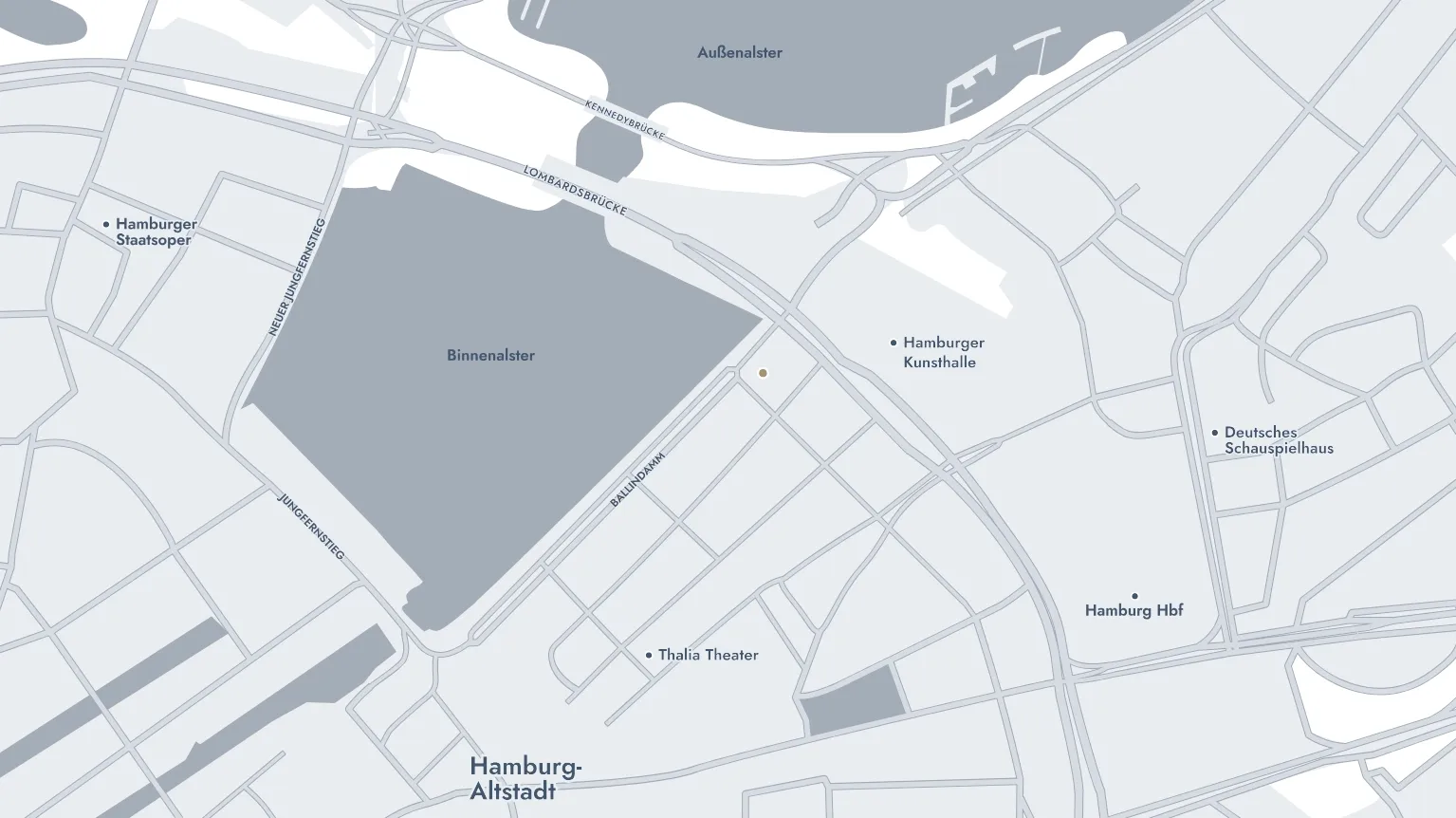
Ballindamm 3
20095 Hamburg
Germany